CVN-81 is the named carrier
The memorandum specifically identifies CVN-81, the future USS Doris Miller, for the replacement plan.
Read the presidential memorandumVerified August 14, 2026
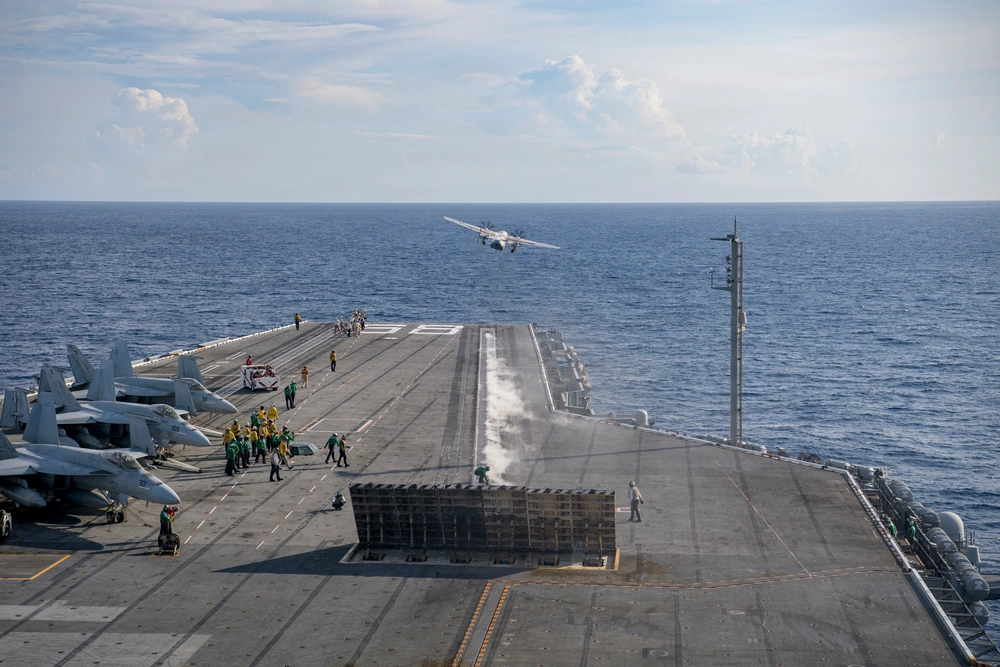
Steam catapults use pressurized steam to drive pistons beneath the flight deck, pulling a launch shuttle that rapidly accelerates an aircraft to flying speed. On August 13, 2026, a White House memorandum ordered a 60-day plan for measures to replace EMALS with steam catapults on the future USS Doris Miller (CVN-81).
Latest verified status
The official memorandum requires the Secretary of War, in consultation with the Navy, to provide the President within 60 days a plan for measures to replace CVN-81’s electromagnetic launch system and advanced weapons elevators with steam and hydraulic systems. The engineering path, validated cost and schedule effects were not yet public when this page was verified.
The memorandum specifically identifies CVN-81, the future USS Doris Miller, for the replacement plan.
Read the presidential memorandumIn 2023, NAVAIR announced a $1.204 billion contract modification covering EMALS and Advanced Arresting Gear production and support for CVN-81 through 2032.
NAVAIR contract announcementThe memorandum sets the direction and the planning deadline. It does not itself publish the revised machinery arrangement, construction sequence, final cost or completed launch-system design.
NAVAIR says production work is to begin immediately.
A 60-day plan is ordered for replacing EMALS with steam catapults on CVN-81.
The next meaningful milestone is the plan required by the memorandum; this site does not label any later outcome as known until verified.
Quick facts
Technical references: NAVAIR Launching Systems, NAVAIR steam-catapult history, and NAVAIR EMALS.
How it works
The mechanism is mostly below the deck. The visible steam cloud is only the most obvious part of a system built around stored steam, launch valves, cylinders, pistons, a shuttle and water brakes.
Steam is held in an accumulator so the catapult can release a large amount of energy quickly without drawing it all instantaneously from the ship’s steam plant.
The aircraft is positioned at the catapult and connected to the deck shuttle through its launch interface. Flight-deck personnel complete checks and clear the launch path.
Commanded steam enters the catapult cylinders. Pressure acts on the pistons below the flight deck.
The pistons drive forward, moving the shuttle and aircraft along the catapult track until the airplane separates at the bow.
Water brakes decelerate the piston assembly at the end of the stroke. The system is then reset for another launch; vented steam can envelop the deck around the catapult.
What the steam cloud tells you
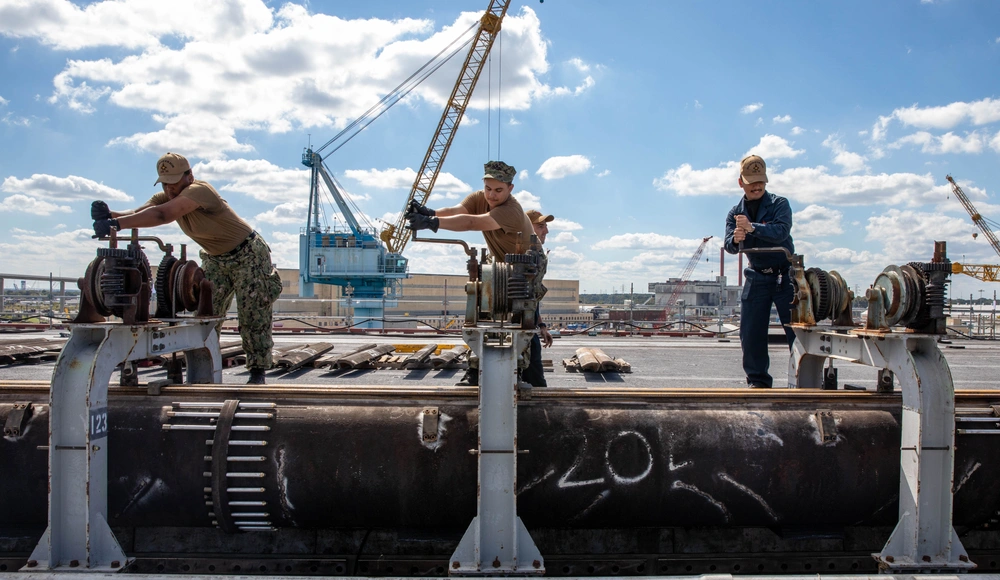
The launch cylinders and pistons run beneath the flight deck. Steam escaping or venting around the launch area makes the event visually dramatic, but the useful work happened as pressure pushed the piston system through its stroke.
See real flight-deck examplesSteam vs. EMALS
Both systems must put the correct amount of energy into an aircraft over a short deck run. Their main difference is how that energy is stored, controlled and delivered.
| Question | Steam catapult | EMALS |
|---|---|---|
| What drives the launch? | High-pressure steam acting on pistons in long cylinders beneath the deck. | Electrical power conversion driving a linear electromagnetic motor. |
| How is acceleration controlled? | Mechanical/steam regulation sets the launch condition; the pressure pulse drives the piston stroke. | NAVAIR highlights precise computer control, more accurate end-speed control and smoother acceleration. |
| Fresh-water demand | NAVAIR’s 2015 Nimitz-class explainer cited about 125 gallons per launch. | No steam accumulator water cycle is needed for the launch stroke itself. |
| Aircraft range | Proven across decades of U.S. carrier aircraft; launch settings are matched to aircraft weight/configuration. | Designed for a broad range from lightweight unmanned aircraft to heavy strike fighters. |
| Maintenance & manning goal | Mature, mechanically intensive system with steam piping, cylinders, valves and water-brake hardware. | NAVAIR lists reduced manning and maintenance among intended benefits. |
| Where used by U.S. carriers? | Nimitz-class carriers. | Ford-class carriers beginning with USS Gerald R. Ford (CVN-78). |
| CVN-81 status, Aug. 2026 | Presidential memorandum directs a 60-day plan to use steam instead of EMALS on CVN-81. | Previously contracted for CVN-81; the memorandum directs planning to replace it on that hull. |
Decades of shipboard experience and an established Nimitz-class maintenance base.
Built around adjustable electrical control, smoother acceleration and reduced steam-plant dependence.
The 2026 question is not simply which technology works; it is how to change an in-progress Ford-class design safely, affordably and on schedule.
EMALS performance claims above are described by NAVAIR and by shipbuilder HII. They are presented as system design/operational characteristics, not as a claim that one system is universally superior.
Real-world gallery
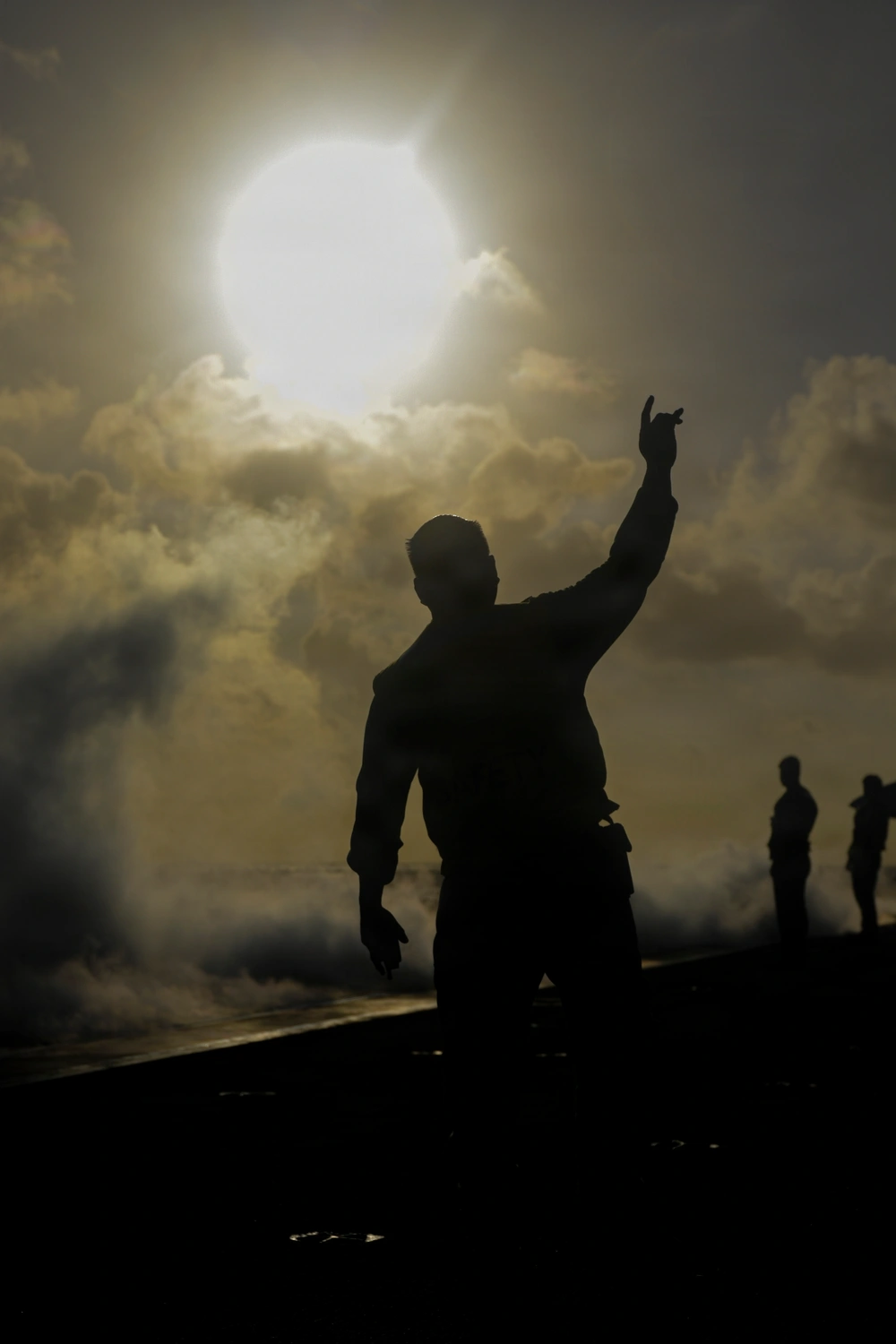
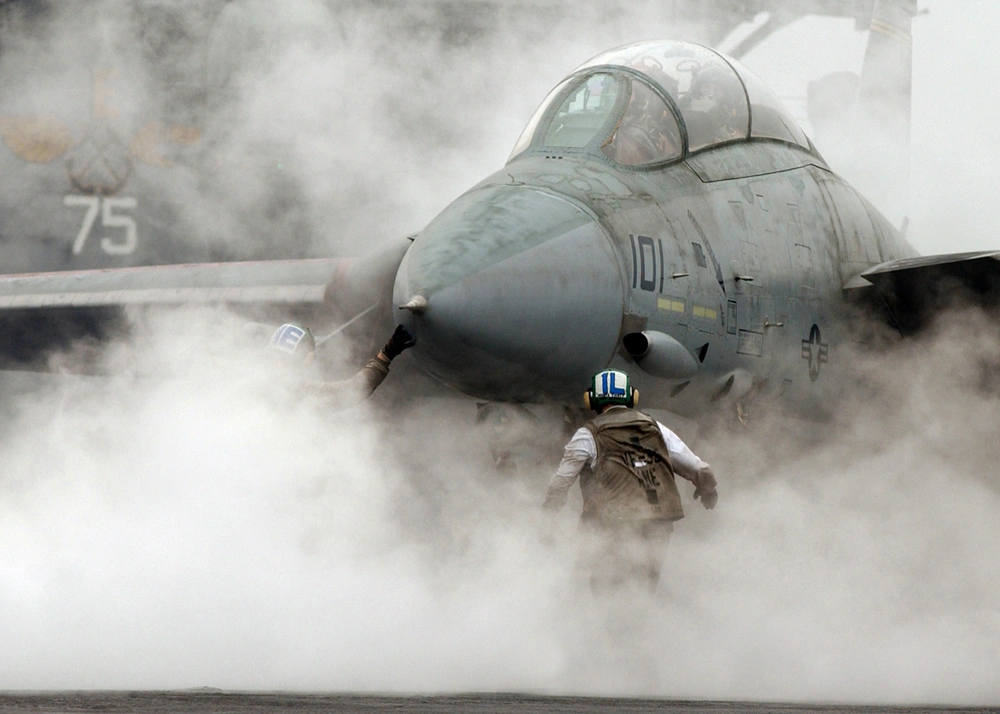
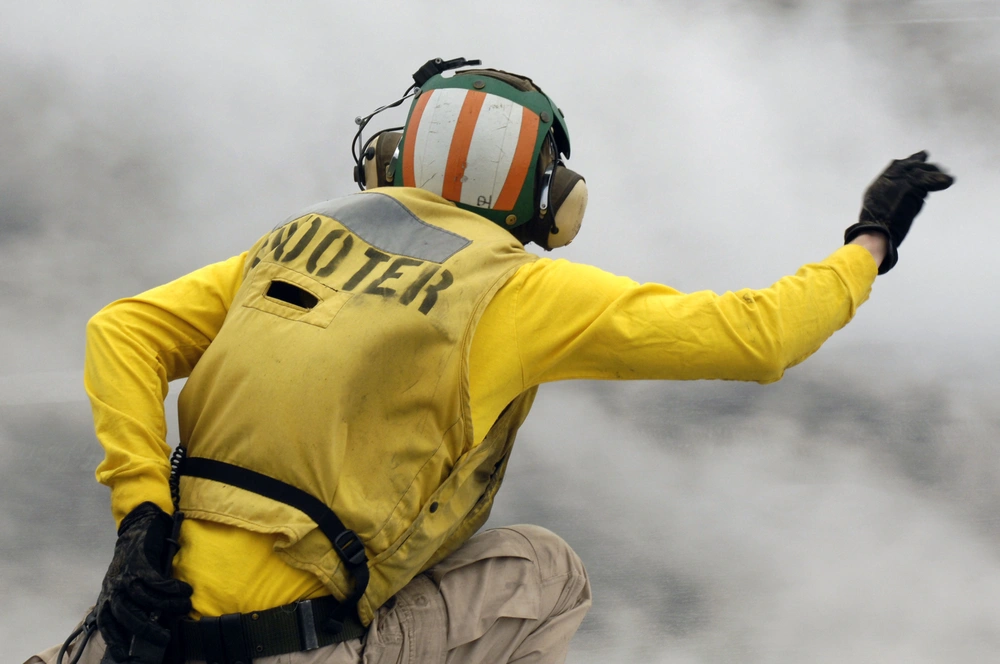
These U.S. military photographs are public-domain DVIDS media selected because they show different parts of the launch system: an aircraft launch, the steam envelope, launch personnel and catapult maintenance.
Watch the systems
The videos load only after you choose to play them, avoiding heavy third-party embeds during the initial page load.
A concise visual reference for the rapid shuttle-driven acceleration of a steam launch.
Play videoNAVAIR lists this YouTube video as the X-47B’s first shore-based catapult launch at NAS Patuxent River on Nov. 29, 2012. NAVAIR event page.
Official Navy footage showing the electromagnetic system being tested from the carrier’s flight deck.
Play videoPublished by the U.S. Navy on DVIDS; video ID 410153, public domain. DVIDS video page.
Questions people keep asking
These questions reflect recurring search and community confusion; the answers below use official or primary technical material rather than treating forum claims as facts.
It requires a plan within 60 days for measures to replace the Electromagnetic Aircraft Launch System on CVN-81 with steam catapults, along with replacing its Advanced Weapons Elevators with hydraulic systems. It is a directive to plan and execute a major design change, not evidence that the physical conversion was already complete on Aug. 13.
No conversion of CVN-78 is ordered by this memorandum. The replacement language specifically names CVN-81. USS Gerald R. Ford is the first ship of the class built with EMALS.
A carrier flight deck is far shorter than a conventional land runway. Fixed-wing carrier aircraft therefore need launch assistance to reach the required airspeed within the available deck distance, especially at heavier operating weights.
The catapult receives steam from the ship’s steam system and stores launch energy in an accumulator. The accumulator allows a large, short-duration release of steam to the launch cylinders rather than demanding the entire launch flow instantaneously from the steam plant.
Steam can escape or be vented around the catapult during the launch/reset cycle. On a cool or humid flight deck it condenses visibly, producing the familiar cloud around the aircraft and launch crew.
There is no useful one-word answer. Steam is a mature system with decades of fleet experience, while EMALS was designed to improve control, maintenance, manning and aircraft-weight flexibility. Reliability also depends on system maturity, configuration, maintenance, operating tempo and what period of service is being compared. Claims that one is always more reliable need a defined metric and time window.
No. The need for a formal 60-day plan is itself evidence that the change is an integration project, not a plug-in replacement. A steam system requires different power, piping, machinery-space, control, maintenance and flight-deck interfaces than an electromagnetic system.
Nimitz-class aircraft carriers use steam launching systems. Ford-class carriers were designed around EMALS; the August 2026 memorandum directs a steam replacement plan specifically for CVN-81.
The next required step is the plan called for by the memorandum. Until a newer official plan, contract change, Navy release or construction update is published and verified, exact redesign details, schedule effects and final costs should be treated as unresolved.
Bottom line
They are large, integrated ship systems that convert stored steam into a precisely timed aircraft launch. The 2026 CVN-81 decision matters because it proposes inserting that mature technology into a Ford-class ship whose launch architecture was built around EMALS. The important next facts are engineering facts: the approved redesign, cost, schedule and construction plan.
Back to the quick answer